
IPv4/v6 and Migration
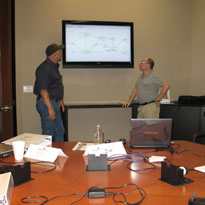
- Course:IPv4/v6 and Migration
- Course ID:IPV6-MW Duration:2-4 days Where: Your Office (7+ Persons)
- Download Course Description (PDF)
Available as a private, customized course for your group at your offices or ours and in some cases as a WebLive(TM) class.
Course Outline
Day 1
- IP Networking & IPv4
- Introduction
- Packet Network Concepts
- OSI Model
- IETF Model
- IP Networks in Transition
- IP Networks In Depth
- Layer 1: The Physical Layer
- Circuits (General Concepts)
- Electrical Circuits
- Optical Circuits
- WDM
- SONET/SDH
- Layer 2: The Data Link Layer
- Local Area Networks
- Network Access
- MAN
- WAN
- Layer 3: The Network Layer
- Internet Protocol (IP)
- Internet Control Message Protocol (ICMP)
- Open Shortest Path First (OSPF) Routing Protocol
- Address Resolution Protocols (ARPs)
- Layer 4: The Transport Layer
- Transmission Control Protocol (TCP)
- User Datagram Protocol (UDP)
- Layer 5: Application Layer
- Hypertext Markup Language (HTML)
- Hypertext Transport Protocol (HTTP)
- File Transfer Protocol (FTP)
- Remote Login (TELNET)
- Simple Mail Transport Protocol (SMTP)
- Other
- DNS / BIND
- DHCP
- Applications
- Browsers
- File Transfer Programs
- Remote Login / Secure Shell (SSH)
- Other
- “Dual Stack” Operations
- Layer 1: The Physical Layer
- Packet Network Concepts
Day 2
- IPv6 Protocol In Depth
- w/comparison to IPv4
- Addressing
- Address Space
- Address Allocation
- Address Lifetime
- Address Mask
- Address Prefix
- Address Resolution Protocol (ARP)
- Address Scope
- Address Types
- Private and Public Addresses
- Unspecified Address
- Communications trace
- Domain Name System (DNS)
- DNS Discovery
- DNS Assignment
- Dynamic Host Configuration Protocol (DHCP)
- DHCP in a Mobile IP Environment
- File Transfer Protocol (FTP)
- Fragments/Fragmentation
- Host Table
- Interface
- Internet Control Message Protocol (ICMP)
- Internet Group Management Protocol (IGMP)
- IP header
- IP header options
- IP header protocol byte
- IP header Type of Service (TOS) byte
- Mobility Header and RFC 4283 Overview
- LAN connection
- Layer 2 Tunnel Protocol (L2TP)
- Loopback address
- Maximum Transmission Unit (MTU)
- Network Address Translation (NAT)
- Network Table
- Node Info Query
- Packet Filtering
- Packet Forwarding
- Packet Tunneling
- PING
- Point-to-Point Protocol (PPP)
- Ports
- Port restrictions
- Protocol Table
- Quality of Service (QOS)
- Renumbering
- Routes and Routing
- Routing Information Protocol (RIP)
- Services Table
- Simple Network Management Protocol (SNMP)
- Sockets API
- Source Address Selection
- Starting and Stopping
- Telnet
- Trace Route
- Transport Layers
- Virtual Private Networking (VPN)
IPv6 Protocol Lab
View, dissect and analyze a variety of IPv6 call traces with a protocol analyzer and answer questions about normal and abnormal protocol operation with a variety of higher layer protocols and network services.
LAB Debrief: Group Discussion
Day 3
- IPv4 to IPv6 Migration Overview
- Migration and Interoperability Concerns
- Security Issues
- Tunnels
- IPv4/IPv6 Embedded Addresses
- Default Configured Tunnel
- Dual Stack Operation
- NAT-PT Emphasis
- NAT-PT (RFC 2765, RFC 2766)
- Protocol Translation
- Address Translation
- NAT-PT (RFC 2765, RFC 2766)
- IPSec Architectural and Capabilities Overview
- IETF IPSec Roadmap
- IPSec Implementation
- AH
- ESP
- IPSec Modes
- Transport Mode
- Transport Mode with NAT Traversal
- Tunnel Mode
- Security Associations (SAs)
- IPSec Processing
- Fragmentation
- Internet Control Message Protocol (ICMP)
- IPSec Processing
- IPv6 Routing
- IS-IS (RFC 1195)
- Overview of the Protocol
- Subnetwork Independent Functions
- Subnetwork Dependent Functions
- Structure and Encoding of PDUs
- Encoding of IP-Specific Fields in IS-IS PDUs
- OSPF for IPv6 (OSPFv3) (RFC 2740)
- Differences from OSPF for IPv4
- Implementation
- OSPF data
- Architectural
- Configurable
- Authentication/Confidentiality for OSPFv3 (RFC 4552)
- IS-IS (RFC 1195)
Day 4: Migration Planning Workshop
The fourth day will be devoted to detail-level planning for migration to IPv6. This session will be conducted as a “chalk talk”, with a client-designated engineer to capture the information and put it into a final document. A review of the planning document will be provided upon your request at no additional cost.
Course in a Nutshell
IPv6 overcomes some of the limitations of IPv4, such as the limited address space, while introducing a number of enhancements in areas such as routing and network auto-configuration. IPv6 is expected to gradually replace IPv4, with the two coexisting for a number of years. With IPv4 networks now migrating to IPv6 worldwide, there is need for a strong hands-on workshop focusing on the IPv6 migration. This course was designed to address that need.
This course is a sweeping start-to-finish introduction to Internet Protocol including both IPv4 and IPv6. The standard outline has been structured to emphasize the migration strategy for a simplified, flat backbone. However, the course can be customized to your own network’s architecture and can exclude or include topics to cater to issues of interest to you now and in the near future. The instruction will employ a powerful combination of lecture and discussion led by a leading IP expert, hands-on lab work that will help you acquire job-specific analysis and trouble-shooting skills, and a workshop day at the end of the course devoted to a full day of detail-level planning for migration to IPv6.
Customize It!
Let us know your reason for studying IPv6 so we can customize the course to your specific needs.
If you do possess prior knowledge of IPv4, the IPv4 material can be omitted, resulting in some time savings. The course can also be shortened by excluding the migration planning that is included in the fourth day.
The course is normally taught workshop-style with the participants using WireShark to engage in hand-on exercises. The course can be optionally taught as a tutorial that does not include the hands-on work.
Aimed At
This course is aimed at I/T and telecom professionals who require a hands-on workshop to help them with IPv6 migration preceded by an up-front review of key IPv4 concepts.
Prerequisites
You should have some prior knowledge of or on-the-job experience with IPv4.
- “Very in-depth, thorough course. Liked the break-down of IPv6 specs vs the IPv4 at a granular level. Instructor used real-world examples specific to our need. Handbook was good and adapted as the class progressed.” – Dell Computers